
.

“Look guys, it’s those people again.”
.
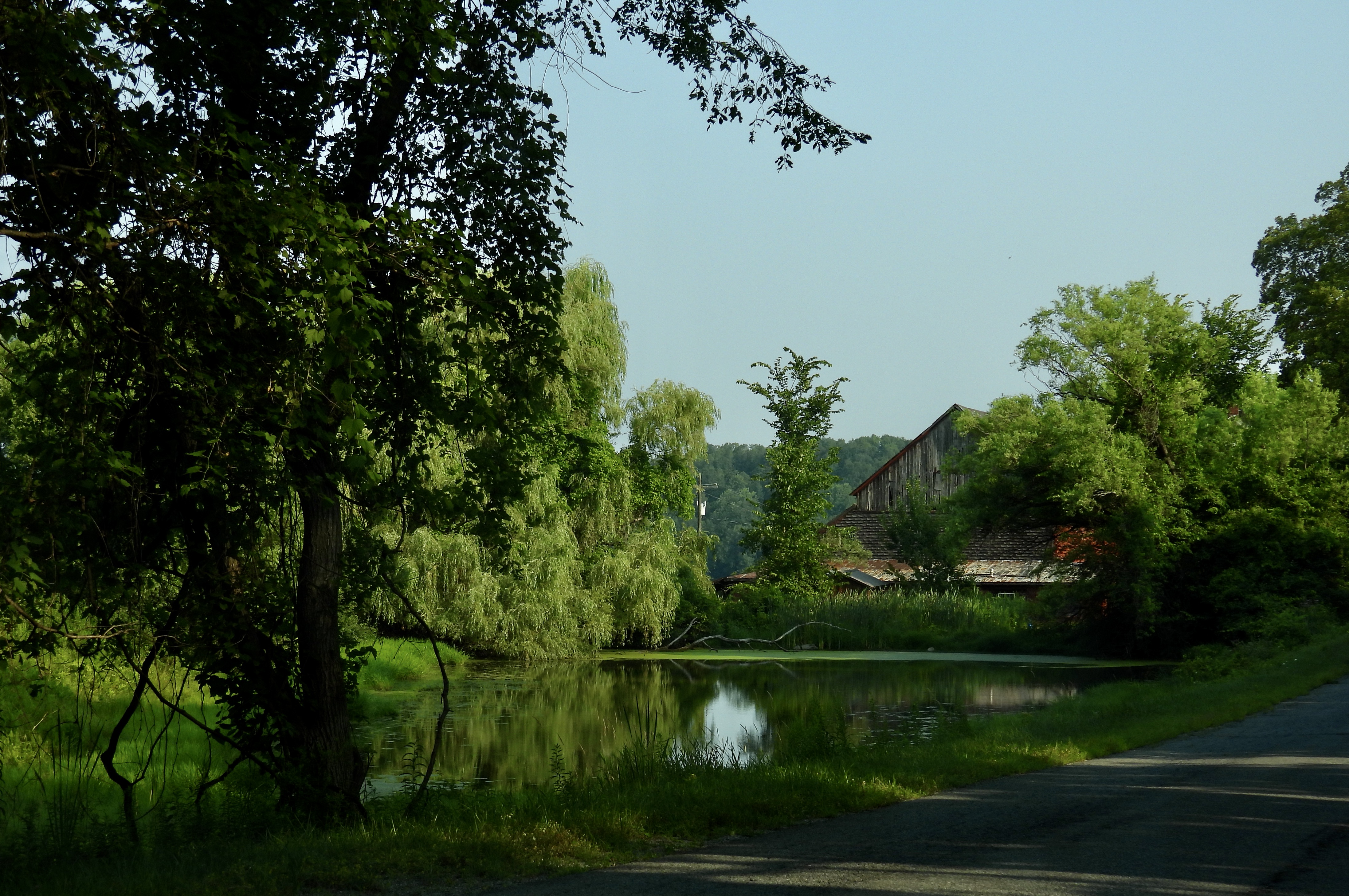
Taking the scenic route to Greenwich, we waved at various friends and rounding a corner came upon a fawn that lifted its head to stare a us.

.

Here and there we paused to view the flora as well.
Field thistle.
.
Purple loosestrife catches the eye.

.

Spotted Joe-Pyeweed.
It is a low-maintenance plant that blooms in late summer, supporting bees and butterflies after other flowers are finished.
Curious about the name, I looked it up:
.
From The Plant Native:
The real Joe Pye may have been identified as recently as 2017. According to a 24-page, thoroughly researched, peer-reviewed paper in the University of Michigan’s Great Lakes Botanist:
“Discrepancies have long existed as to the race of the man for whom Joe-Pye-weed was named, the century and the part of the country in which he lived, and even whether the plant name was derived from the name of any person, real or fictional. Our investigation has indicated that this plant name is from the cognomen of Joseph Shauquethqueat, an 18th- and early 19th-century Mohican sachem, who lived successively in the Mohican communities at Stockbridge, Massachusetts, and New Stockbridge, New York.” (Source)
Joseph Shauquethqueat was born in 1722 into the Mohican community. “Pye” was a colonist shorthand for Shauquethqueat—a common early American practice, as many Mohicans were given or adopted Anglicized surnames when signing official documents.
As a young man, he and his community were displaced from their homelands in what’s now Albany, New York, and relocated to Stockbridge, Massachusetts. The move was framed as a “reward” for the Mohicans’ alliance with British colonists during the French and Indian War.
The Stockbridge land gift was a sham. White settlers quickly encroached on the land. Racist laws made it nearly impossible for the Mohicans to protect their property or even own businesses.
Joe becomes Chief Sachem
In 1777, Shauquethqueat became Chief Sachem of the Stockbridge Mohicans. During his time as leader, he asked the Massachusetts government to protect what they had been given: “[w]e and our fathers had once been the rightful possessor of all your Country,” he wrote in one letter.
The letters didn’t matter. “In 1785, the Stockbridge Mohicans, impoverished and having succumbed to pressures to sell much of their land in Massachusetts or surrender it in settlement of debts, and with their civil rights in Stockbridge being eroded as the white population increased, began an exodus to what is now part of Madison and Oneida counties, New York.”
Shauquethqueat didn’t trust the government for this second move.
The Oneida, another Indigenous nation, offered the land.
Enter George Washington—yes, that George Washington
Picking up and moving an entire community is a miracle, especially one with a target on its back. Shauquethqueat needed protection.
On July 2, 1783, Shauquethqueat wrote to a white leader asking for protection: George Washington. Washington wrote back that the Mohicans had “remained firmly attached to us, [and had] fought and bled by our side…consider them as friends and subjects to the United States of America.”
The letter helped deliver safe passage to New York—a tiny bit of light against generations of violence and disenfranchisement.
.
The Joe Pye Weed plant is known within Indigenous communities for helping ease fevers. It became a medicine that European colonists depended on. Stories tell of Native Americans saving white settlers from death by introducing its medicinal properties.
This medicinal plant needed a memorable and trustworthy name.
The name Joe Pye Weed came from European settlers, who used a name they knew and respected for a plant they depended on.
.
While at the American School in Phnom Penh, I remember being affected by James Fenimore Cooper’s The Last of the Mohicans.
How unbearably sad to be the last of a people or much worse, a species.

.

We zigged and zagged cross country until we lost our bearings….
.
…traversing long shady tunnels.


.

Till finally we came to a familiar white picket fence.
Then we sailed in to Greenwich to collect a large bag of bird seed and made tracks for home.
.
“Oh, you’re back.”
“Lunch?”

A sad and all-too familiar story of colonialism, and its effects on the indigenous community. Even though he is remembered in the medicinal plant, his real name was too difficult for the white settlers to be bothered with.
Best wishes, Pet.
*Pete.
Thank you so much, Carolyn, for the fascinating post, full of information, which reminded me of the book I loved, The Last of the Mohicans! I have read this book many times and learn the importance of being observant. Thank you for the beautiful photos of the landscapes!
Joanna
I do hope you didn’t keep the pussy cats waiting for lunch!
I love Little Man’s reaction to you arriving back home, from you lovely adventure.
His face is precious!
Catherine
It’s wonderful when you take your time travelling somewhere – the beauty you see all around is so rewarding. It was very interesting to read about how the Joe Pye Weed got its name – I think few plants have such a history behind their name. Oh, hello there Little Man 😊.